
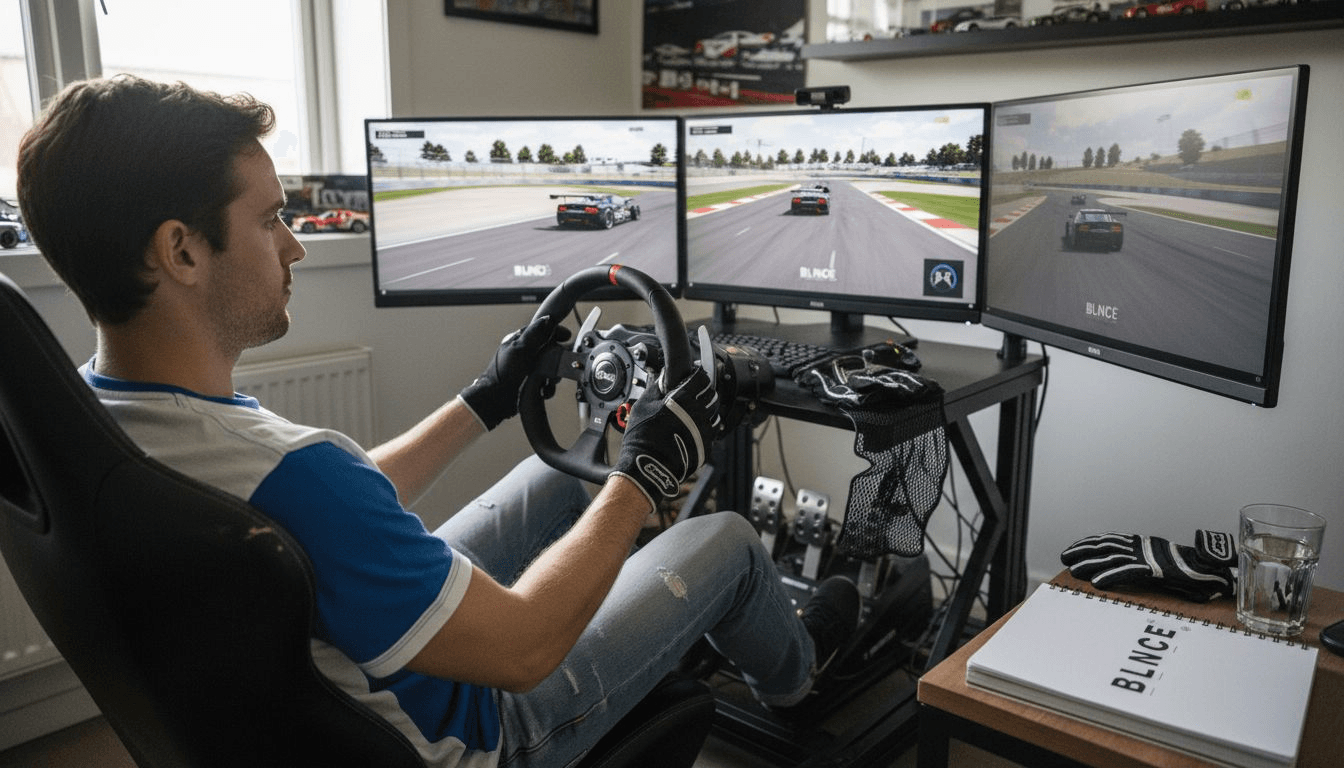
Choosing the right professional racing wheel for esports sim racing can feel overwhelming with technical specifications and countless options. This guide cuts through the complexity by clarifying key performance criteria, comparing top models, and providing situational recommendations based on your racing style and budget. You'll learn to evaluate specs that matter, understand what differentiates elite wheels, and select confidently for competitive advantage.
Table of Contents
- How To Choose A Professional Racing Wheel: Key Selection Criteria
- Fanatec Podium Racing Wheel F1
- Simagic Alpha Mini: Compact Powerhouse
- Moza R9 Racing Wheel: Precision For Endurance GT
- Comparative Overview Of Professional Racing Wheels
- Situational Recommendations For Different Racing Genres And Needs
- Elevate Your Sim Racing Setup With Balance Central
Key Takeaways
| Point | Details |
|---|---|
| Direct drive motors with high torque deliver the precise force feedback essential for esports-level control | Wheels with 15-20 Nm torque provide the responsiveness professionals demand |
| Top racing wheels specialize in either Formula or GT racing with features tailored to each genre | Your preferred sim type should guide wheel selection |
| Price alone doesn't guarantee performance; compatibility and customization matter equally | Match specs to your existing pedals and cockpit setup |
| Ergonomic design reduces fatigue during long races and improves consistency | Comfortable grips and customizable buttons enhance control |
| Situational factors like space constraints and racing genre determine the best choice | Formula racers need different features than endurance GT drivers |
How to Choose a Professional Racing Wheel: Key Selection Criteria
Understanding core technical specifications separates a good racing wheel from one that delivers genuine competitive advantage. Force feedback torque stands as the most decisive factor. Direct drive motors outperform belt-driven alternatives by eliminating mechanical lag, transmitting track information instantly to your hands.
Torque output directly affects how accurately you feel road surface changes, tire grip limits, and vehicle dynamics. Professional esports racers typically require 15-20 Nm of torque for precise control inputs. Lower torque wheels struggle to replicate realistic forces during high-speed cornering or aggressive braking.
Compatibility extends beyond plug-and-play functionality. Your wheel must integrate seamlessly with existing pedals and cockpit mounting systems. Load cell-based pedals compatible with professional racing wheels improve braking precision by up to 30%, making the pedal-wheel combination critical for lap time gains. Hydraulic options offer even more realistic pressure feedback for endurance racing.
Ergonomics and customization options significantly impact performance during extended sessions. Contoured grips reduce hand fatigue. Programmable buttons let you access key functions without releasing the wheel. Adjustable paddle shifters accommodate different hand sizes and shifting preferences.
Price reflects build quality and feature sets, but smart buyers balance cost against actual performance needs. A $2000 wheel won't help if your cockpit can't support its mounting requirements or if you primarily race arcade-style games. Brand reputation matters because reliable customer support and firmware updates extend your investment's lifespan.
Pro Tip: Test force feedback settings in your primary sim before making final purchasing decisions. Some wheels excel in certain racing titles but feel less natural in others due to software optimization differences.
Fanatec Podium Racing Wheel F1
The Fanatec Podium Racing Wheel F1 represents the pinnacle of Formula racing simulation hardware. Its direct drive motor delivers 20 Nm of torque, providing instantaneous force feedback that translates every track detail into tactile information. Fanatec Podium F1 delivers 20% faster force feedback response times than MOZA R9 under identical conditions, giving competitive racers measurable reaction time advantages.
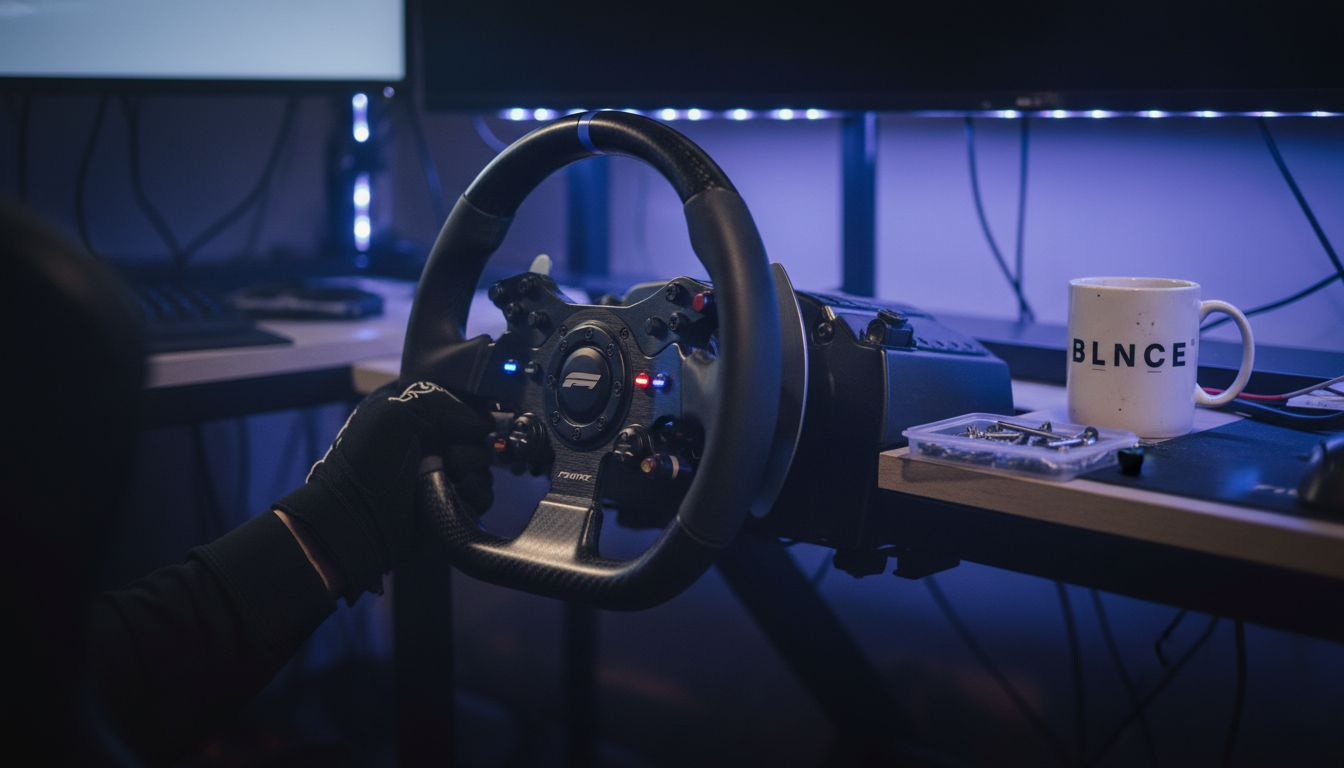
Build quality matches professional esports standards. Carbon fiber construction keeps weight low while maintaining structural rigidity during aggressive inputs. Premium materials ensure durability through thousands of racing hours. The wheel's button layout mirrors real Formula cars, with intuitive rotary encoders for brake bias and differential adjustments mid-race.
This wheel specifically targets Formula racing wheels enthusiasts who demand absolute precision. Its diameter and grip design suit open-wheel racing positions. The quick-release system allows easy swaps between wheel rims, though most users stick with the included F1 configuration.
Pricing exceeds $1500, positioning this as a premium investment for serious competitors. The cost reflects advanced electronics, superior build materials, and Fanatec's established reputation in professional sim racing circles. Setup complexity requires technical knowledge, making this better suited for experienced users who can optimize force feedback profiles and calibration settings.
Key considerations include:
- Direct drive system eliminates mechanical lag for instant track feedback
- 20 Nm torque handles the most demanding Formula simulations
- Carbon fiber construction balances durability with lightweight performance
- Premium price point targets serious esports competitors
- Complex setup process assumes technical proficiency
Simagic Alpha Mini: Compact Powerhouse
The Simagic Alpha Mini proves that space constraints don't require performance compromises. This compact direct drive wheel generates 15 Nm of torque, delivering professional-grade force feedback in a package that fits desk setups and smaller cockpits. Its reduced footprint makes it ideal for racers who need portability without sacrificing competitive capability.
Versatility defines the Alpha Mini's appeal. It handles both Formula and GT simulations effectively, making it perfect for racers who enjoy multiple genres. The wheel's balanced characteristics don't favor one racing style over another, unlike specialized alternatives that optimize for specific vehicle types.
Lightweight construction facilitates easy mounting and repositioning. The Alpha Mini weighs significantly less than full-size alternatives while maintaining structural integrity during aggressive driving. Quick-release mechanisms simplify wheel rim swaps if you want to customize for different racing styles.
Price-to-performance ratio positions this wheel in the mid-range market segment. You get direct drive precision at a cost below premium alternatives like the Fanatec Podium. The value proposition attracts racers stepping up from entry-level gear who aren't ready to commit to flagship pricing.
Pro Tip: The Alpha Mini excels for racers needing compact and versatile racing wheels that perform across multiple sim titles. Its neutral handling characteristics adapt well to different force feedback settings, letting you fine-tune for personal preference.
Notable features include:
- 15 Nm torque provides professional feedback in compact form
- Suits both Formula and GT racing without specialization trade-offs
- Lightweight design simplifies desk mounting and cockpit integration
- Mid-range pricing balances performance with accessibility
- Space-saving dimensions accommodate limited setup areas
MOZA R9 Racing Wheel: Precision for Endurance GT
The MOZA R9 brings innovative optical sensor technology to endurance GT racing. Its 16 Nm torque output pairs with advanced sensors that maintain consistent force feedback accuracy during marathon sessions. MOZA R9 features optical sensors with 16 Nm torque optimizing feedback for endurance GT races, addressing the consistency challenges that plague longer competitions.
Custom rotary encoders enhance precision during extended racing. Traditional potentiometer-based controls can drift over time, affecting settings accuracy. The R9's optical design eliminates this wear-related degradation, ensuring brake bias and traction control adjustments remain accurate through entire endurance events.
GT racing optimization shows in the wheel's tuning characteristics. Force feedback profiles emphasize the smooth, progressive inputs that GT cars demand rather than the sharp, aggressive responses Formula wheels prioritize. This makes the R9 particularly effective for multiclass endurance racing where consistent lap times matter more than peak aggression.
Pricing sits in the mid-to-high range, reflecting advanced sensor technology and build quality. The cost positions below flagship models while offering features that directly benefit serious competitors. User feedback consistently highlights reliability and feedback consistency as standout qualities.
The wheel's construction uses durable materials that withstand intensive use. Heat dissipation design prevents performance degradation during long sessions. Cable management solutions keep your cockpit organized, important for endurance racing where comfort and ergonomics significantly impact concentration.
Key specifications include:
- 16 Nm torque with optical sensors for drift-free accuracy
- Custom rotary encoders maintain precision through long sessions
- GT racing optimization suits endurance competitions
- Mid-to-high pricing reflects advanced technology
- Strong reliability reputation among endurance racers
Comparative Overview of Professional Racing Wheels
Understanding how top wheels compare across key specifications helps you evaluate which best matches your needs. Torque output varies from 15-20 Nm, with higher values providing more detailed force feedback but requiring stronger mounting solutions. Fanatec Podium F1 offers 20% faster force feedback response times versus MOZA R9 in side-by-side testing, demonstrating measurable performance differences.
Price ranges reflect feature sets and target markets. Entry-level direct drive wheels start around $800, mid-range options like the MOZA R9 and Simagic Alpha Mini cost $1000-1300, while premium choices exceed $1500. Higher prices generally correlate with stronger torque, better build materials, and more sophisticated electronics.
Compatibility differences matter when integrating wheels into existing setups. Some manufacturers use proprietary quick-release systems that limit wheel rim options. Others adopt universal standards that expand customization possibilities. Pedal compatibility varies, with certain wheel bases offering better integration with specific pedal brands.
Ergonomic Formula racing wheels prioritize button placement and grip design for specific racing positions. GT wheels typically feature larger diameters and different button layouts suited to closed-cockpit racing. These ergonomic factors significantly impact comfort during long sessions.
Esports team endorsements provide insight into competitive reliability. Professional teams test equipment under extreme conditions and choose wheels that deliver consistent performance under pressure. Fanatec and Simagic both maintain strong professional esports partnerships, while MOZA has gained traction in endurance racing communities.
| Feature | Fanatec Podium F1 | Simagic Alpha Mini | MOZA R9 |
|---|---|---|---|
| Torque Output | 20 Nm | 15 Nm | 16 Nm |
| Response Time | Fastest (20% faster) | Fast | Fast |
| Primary Use | Formula Racing | Multi-Genre | GT Endurance |
| Form Factor | Full Size | Compact | Standard |
| Price Range | $1500+ | $1000-1200 | $1100-1300 |
| Key Technology | Direct Drive Premium | Compact Direct Drive | Optical Sensors |
| Esports Adoption | High | Growing | Strong GT Community |
Situational Recommendations for Different Racing Genres and Needs
Your specific racing situation determines which wheel delivers optimal performance. Formula sim racers benefit most from high-torque direct drive wheels like the Fanatec Podium F1. The instant response times and aggressive force feedback characteristics match open-wheel racing demands. Quick direction changes and precise steering inputs feel natural with 20 Nm torque.
GT endurance racers should prioritize wheels with optical sensors like the MOZA R9. Long session consistency matters more than peak responsiveness in endurance competition. The R9's drift-free encoders maintain settings accuracy through multi-hour races, preventing the gradual degradation that affects performance over time.
Compact setups gain significant advantages from smaller wheels such as the Simagic Alpha Mini. Desk racers and those with limited space can't always accommodate full-size direct drive bases. The Alpha Mini delivers professional force feedback without requiring dedicated sim rig infrastructure, making it perfect for apartment dwellers or multi-purpose gaming spaces.
Budget-conscious users face trade-offs between features and cost. Entry-level direct drive wheels offer basic functionality at lower prices but lack advanced features like optical sensors or premium build materials. Mid-range options like the Alpha Mini and R9 provide better long-term value through superior durability and upgrade potential.
Customization and compatibility should guide final choices. Consider these factors:
- Verify your wheel base supports your preferred pedal brand and connection type
- Check quick-release compatibility if you plan to swap wheel rims frequently
- Confirm mounting dimensions match your cockpit or desk setup
- Research firmware update frequency and quality for long-term software support
- Evaluate button layout against your most-played sim titles for optimal ergonomics
Best wheels by racing genre and budget vary significantly, so matching your primary use case ensures you invest wisely. Multi-genre racers might prefer versatile options like the Alpha Mini, while specialists benefit from purpose-built choices.
Elevate Your Sim Racing Setup with Balance Central
Your path to competitive advantage starts with the right equipment. Balance Central curates premium sim racing wheels from leading manufacturers, ensuring you access proven esports-grade hardware. Whether you need the raw power of direct drive systems or the space-saving efficiency of compact designs, our selection covers every competitive requirement.
Explore the Simagic FX Pro Racing Wheel for versatile performance across racing genres. Check out the MOZA FSR2 Formula Racing Wheel if you specialize in open-wheel competition. GT racers will appreciate the Simagic GT Neo Racing Wheel optimized for endurance racing.
Our expert support team helps you optimize compatibility with existing pedals and cockpits. We understand that professional sim racing requires precise integration between components. Fast delivery ensures you're racing competitively without extended downtime. Competitive pricing makes esports-level equipment accessible to serious racers ready to elevate their performance.
Frequently Asked Questions
Which racing wheel offers the fastest force feedback response?
The Fanatec Podium Racing Wheel F1 delivers the fastest force feedback response, testing 20% quicker than competitors like the MOZA R9. This response advantage translates to measurable reaction time improvements during competitive racing.
Are direct drive wheels always better than belt-driven ones?
Direct drive wheels eliminate mechanical lag inherent in belt systems, providing more accurate force feedback. For esports competition, direct drive represents the minimum standard for professional-level performance and control precision.
Can I use a professional racing wheel with any pedal set?
Most professional wheels support multiple pedal brands through USB connections, but optimal integration requires checking compatibility specifications. Load cell and hydraulic pedals often need specific wheel base features for full functionality.
How important is ergonomic design for long sim racing sessions?
Ergonomic design critically affects performance during endurance races by reducing hand fatigue and improving button accessibility. Proper grip contours and customizable controls prevent concentration lapses that cost lap time.
What budget should I allocate for a competitive esports racing wheel?
Competitive esports racing wheels range from $1000-1500 for mid-tier direct drive options to $1500+ for premium models. Budget $1200 minimum for wheels with features that support serious competition and long-term reliability.