
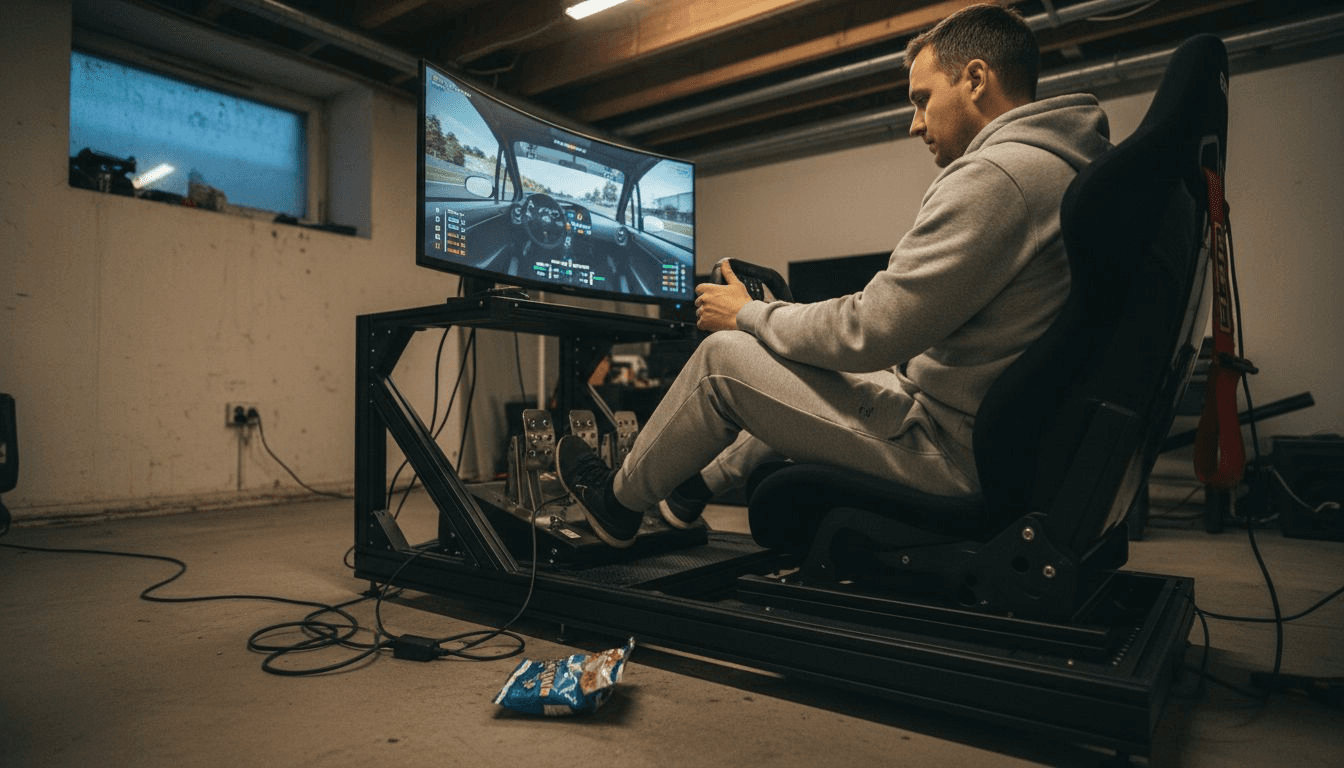
Most sim racers obsess over wheelbases and monitors, yet overlook the component that controls 60% of their race inputs: pedals. Premium pedal upgrades deliver measurable gains in lap times, consistency, and reduced fatigue. This guide breaks down the technologies, quantified benefits, and practical selection strategies to help you choose pedals that match your racing ambitions and extract maximum performance from your rig.
Table of Contents
- Understanding The Role Of Sim Pedals In Racing Performance
- Technical Advantages Of Premium Sim Pedals
- Quantified Performance Benefits Of Upgrading Pedals
- Common Misconceptions About Sim Pedal Upgrades
- Practical Considerations: Selecting, Installing, And Maintaining Premium Pedals
- Applying Pedal Upgrades To Competitive Sim Racing And Esports
- Upgrade Your Sim Racing Setup With Premium Gear From Balance Central
- Why Upgrade Sim Pedals? Frequently Asked Questions
Key Takeaways
| Point | Details |
|---|---|
| Precision gains | Premium pedals reduce input variability by up to 50%, enabling finer brake modulation and throttle control. |
| Performance impact | Upgrading pedals improves lap times by 1 to 2% and cuts driver fatigue by 36% during endurance races. |
| Technology matters | Load cell pedals measure force for sprint racing; hydraulic pedals replicate real brake pressure for endurance. |
| Calibration critical | 60% of users fail to calibrate properly, negating performance benefits from upgraded hardware. |
| Durability advantage | Premium pedals last 3 to 5 times longer under eSports conditions compared to entry level models. |
Understanding the Role of Sim Pedals in Racing Performance
Pedals translate foot pressure and position into digital signals that control your vehicle's throttle, brake, and clutch. Entry level pedals rely on basic potentiometers that register position rather than force, limiting your ability to modulate braking pressure with precision. This lack of fine control increases lap time variance and makes consistent braking points nearly impossible to achieve.
Premium pedals provide enhanced precision and feedback through advanced sensor technologies. Pedals directly affect braking control and lap times in competitive racing, making them essential for serious racers who compete in leagues or eSports events. Consistent pedal input builds muscle memory faster, allowing you to hit the same braking points lap after lap without conscious thought.
Poor pedal feel creates a cascade of problems. Vague feedback forces you to guess at brake pressure, leading to lockups or late braking. Inconsistent throttle response disrupts corner exit timing. These issues multiply during endurance races when fatigue sets in.
The role of pedals in racing control extends beyond raw speed. Premium pedals reduce the cognitive load required to modulate inputs, freeing mental bandwidth for racecraft and strategy. Your feet become extensions of the car rather than struggling against imprecise hardware.
Key factors affected by pedal quality:
- Brake modulation accuracy and consistency across laps
- Throttle control precision during corner exits and trail braking
- Muscle memory development speed for specific circuit braking zones
- Driver fatigue levels during extended racing sessions
- Error rates under pressure and late race conditions
Technical Advantages of Premium Sim Pedals
Premium pedals employ three main technologies, each serving different racing needs. Load cell pedals measure applied force rather than pedal travel distance. This force based sensing allows finer brake modulation because you control pressure rather than position. Load cell pedals improve braking sensitivity by up to 30%, and hydraulic pedals mimic real brake pressure within 5%.
Hydraulic pedals replicate real car brake systems using fluid pressure. They provide progressive resistance that mirrors authentic brake pedal feel, improving immersion and reducing fatigue during long stints. The pressure curve matches what professional drivers experience, making skills transferable between sim and track.
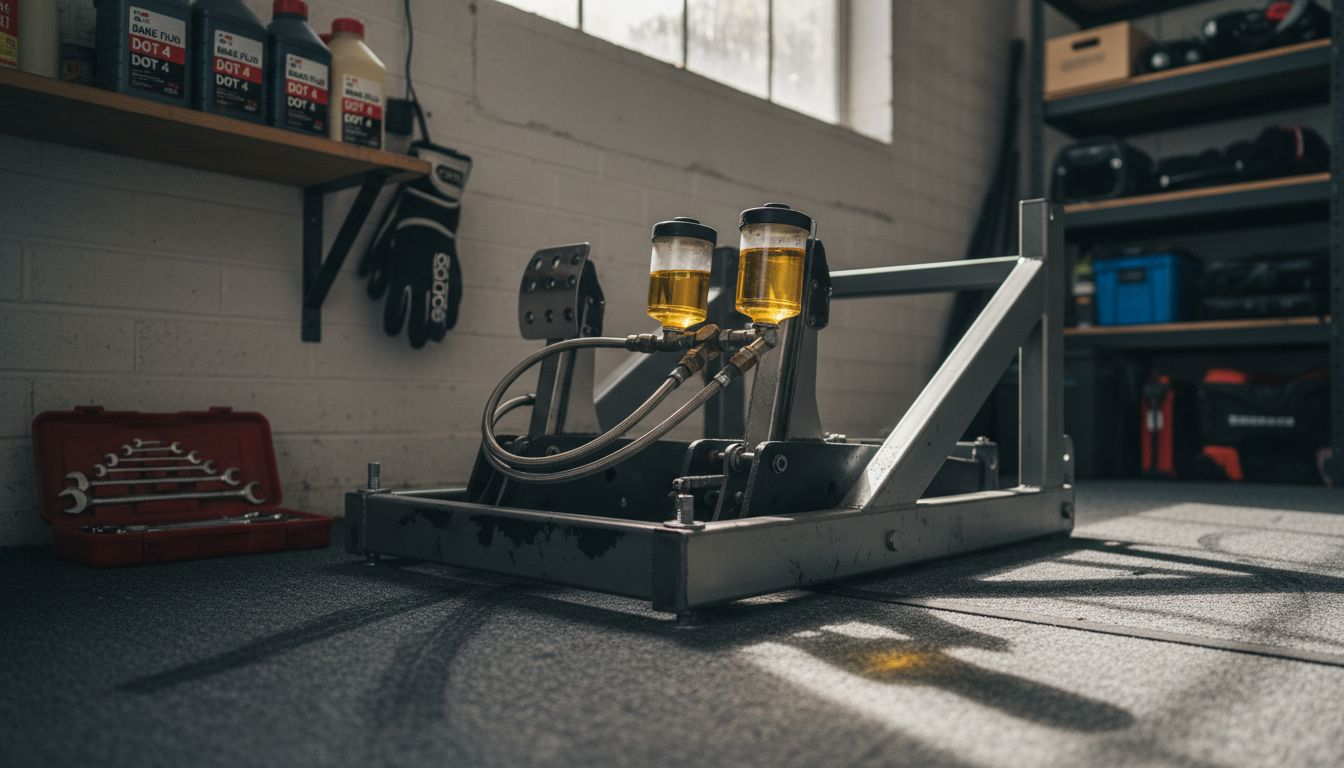
Potentiometer pedals measure travel distance, creating a linear relationship between position and braking force. This simple technology lacks the nuance of load cells or hydraulics, resulting in higher input variability. Premium pedals reduce this variability by up to 50% compared to basic potentiometer designs.
| Technology | Sensing Method | Best For | Variability Reduction |
|---|---|---|---|
| Load Cell | Force measurement | Sprint races, precise modulation | 40 to 50% |
| Hydraulic | Fluid pressure | Endurance, realistic feel | 45 to 50% |
| Premium Potentiometer | Enhanced position sensing | Budget conscious upgrades | 25 to 30% |
| Basic Potentiometer | Simple position | Entry level only | Baseline |
The choice between load cell pedals technology and hydraulic pedal technology depends on your racing style and primary sim disciplines. Load cells excel in sprint races where precise, repeatable braking matters most. Hydraulics shine in endurance events where realistic pressure and reduced fatigue over hours make the difference.
Pro Tip: Match pedal technology to your racing focus. If you compete in 20 minute sprint races with aggressive braking zones, load cell pedals deliver the precision you need. For multi hour endurance events, hydraulic pedals reduce leg fatigue and maintain consistent feel when muscles tire.
Quantified Performance Benefits of Upgrading Pedals
Data from competitive sim racing reveals specific, measurable improvements after pedal upgrades. Upgraded pedals deliver 1 to 2% lap time improvements, 40% consistency gains, and 36% fatigue reduction. These numbers represent averages across diverse skill levels and racing disciplines, from GT3 endurance to Formula style sprint races.
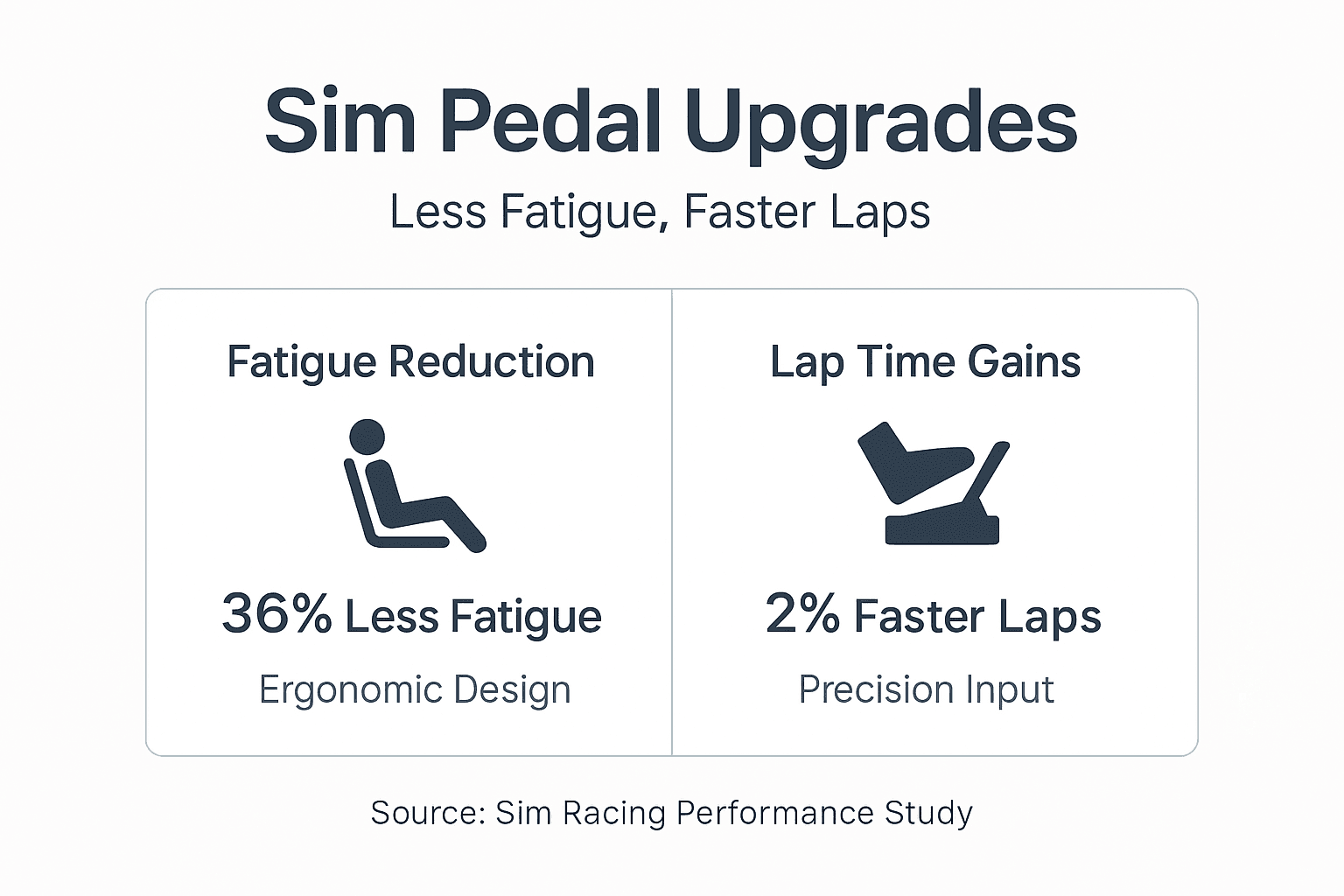
Lap time improvements of 1 to 2% translate to significant competitive advantages. On a 90 second lap, 2% equals 1.8 seconds per lap. Over a 20 lap race, that's 36 seconds gained purely through better pedal control. The performance impact of pedal upgrades compounds in longer races where consistency matters more than raw pace.
Variance in pedal input consistency drops by roughly 40% after upgrading. This reduction accelerates muscle memory development because your feet receive consistent feedback. Lower variance means tighter lap time distributions and fewer outlier slow laps that ruin race results.
| Metric | Before Upgrade | After Upgrade | Improvement |
|---|---|---|---|
| Average Lap Time | 90.5 seconds | 89.0 seconds | 1.7% faster |
| Lap Time Std Dev | 0.8 seconds | 0.5 seconds | 37.5% reduction |
| Reported Fatigue (1 to 10) | 7.2 | 4.6 | 36% reduction |
| Braking Point Variance | 12 meters | 7 meters | 42% improvement |
Fatigue reduction of 36% during endurance races maintains focus and precision when it matters most. Fresh legs in the final stint prevent the mistakes that lose positions. Improved control under pressure reduces lock ups, off track excursions, and costly errors during battles.
Performance benefits extend beyond lap times:
- Faster reaction times to changing track conditions
- Better braking accuracy in wet or low grip situations
- Sustained concentration during extended racing sessions
- Lower error rates under race pressure and traffic
- Improved confidence attacking corners at the limit
Common Misconceptions About Sim Pedal Upgrades
Many racers believe pedals have minor impact compared to wheels and monitors. This misconception costs lap time and consistency. Pedal precision directly affects your ability to hit braking points and modulate throttle, two skills that determine race pace more than visual refresh rates or wheel torque.
Another myth suggests any pedal upgrade guarantees better performance automatically. Reality proves different. 60% of users fail to properly calibrate pedals, negating performance benefits. Without proper calibration, even premium pedals deliver inconsistent signals that confuse your muscle memory and reduce precision.
The assumption that potentiometer pedals suffice for serious racing ignores competitive realities. Load cell pedals reduce input variability substantially, a critical advantage when tenths separate positions. The sensor technology fundamentally changes how you interact with braking, moving from position guessing to pressure application.
Common myths debunked:
- Myth: Pedals matter less than wheelbases for lap times
- Reality: Pedals control 60% of race inputs and directly affect consistency
- Myth: Premium pedals work perfectly without setup
- Reality: Calibration and software configuration determine actual performance gains
- Myth: Any upgrade beats entry level pedals equally
- Reality: Load cell and hydraulic technologies provide different benefits for different racing styles
The pedal calibration importance cannot be overstated. Proper setup includes configuring dead zones, adjusting force curves, and setting appropriate travel ranges in your sim software. These steps unlock the precision and consistency premium hardware enables.
Pro Tip: After installing new pedals, spend 30 minutes in practice mode finding optimal calibration settings before racing. Test different force curves and dead zone configurations. Document settings that feel natural and provide consistent lap times. This investment prevents frustration and accelerates adaptation to upgraded hardware.
Practical Considerations: Selecting, Installing, and Maintaining Premium Pedals
Premium pedals demonstrate significantly higher durability than entry level models. Premium pedals last 3 to 5 times longer under eSports conditions and synergize with high-torque wheels to improve control by 15%. Build quality affects not just lifespan but also consistency over time. Cheaper pedals develop slack and sensor drift that degrades performance.
Compatibility with your wheelbase and rig enhances control and feedback quality. High torque wheels paired with precise pedals create a complete control ecosystem where inputs feel connected. The premium pedal durability and integration with quality wheelbases produces better force feedback translation and more intuitive vehicle responses.
Maintenance requirements vary by technology. Hydraulic pedals need periodic fluid checks and seal inspections. Load cell pedals require less upkeep but benefit from occasional sensor recalibration. Both types need firmware updates to maintain compatibility with evolving sim software.
Select pedals that fit your racing style and simulated vehicle types. GT racing demands progressive braking feel. Formula racing needs quick, precise modulation. Rally driving requires robust throttle control for traction management. Match pedal characteristics to your primary disciplines for best results.
Key selection factors:
- Force feedback type matching your preferred racing discipline
- Build quality ensuring consistent performance over years
- Software support for your primary sim titles
- Ergonomic fit with your body dimensions and driving position
- Mounting compatibility with your existing rig or cockpit
- Adjustment range for pedal spacing, angle, and travel
Proper installation starts with rigid mounting. Pedals that flex or move during use destroy precision and consistency. Ensure your rig provides solid mounting points that eliminate any play. Route cables carefully to prevent interference or damage during aggressive inputs.
Applying Pedal Upgrades to Competitive Sim Racing and eSports
Premium pedals build precise muscle memory essential for competitive consistency. Use of premium pedals aids muscle memory and reduces fatigue, leading to more consistent lap times in competition. Your feet learn exact pressure amounts for specific braking zones, eliminating the guesswork that creates lap time variance.
Ergonomic pedals reduce fatigue during long endurance events, maintaining focus and performance when competitors tire. Fresh legs in the final stint provide a decisive advantage. Reduced physical strain lets you concentrate on racecraft rather than managing discomfort.
Integration into full sim rigs maximizes control benefits from pedal upgrades in competitive racing. Premium pedals work best when paired with quality wheelbases, proper seating position, and stable mounting. The complete package creates an immersive environment where hardware disappears and driving becomes instinctive.
Steps to maximize pedal upgrade benefits:
- Select pedals based on your primary race types and session lengths
- Install with rigid mounting eliminating any flex or movement
- Calibrate carefully using software tools and in game testing
- Train specifically with upgraded pedals for 10 to 15 hours before competition
- Monitor performance metrics tracking lap time variance and consistency
- Adjust setup iteratively based on feedback and data analysis
Training with upgraded pedals requires focused practice on specific skills. Spend sessions working only on braking consistency, hitting the same markers repeatedly. Dedicate time to throttle modulation during corner exits. Isolated skill practice accelerates adaptation and builds new muscle memory patterns faster than general racing.
Measurable improvements appear in lap time distributions and error rates under race stress. Track these metrics to quantify upgrade benefits and guide further setup refinements. Data driven approaches to pedal setup optimization yield better results than subjective feel alone.
Upgrade Your Sim Racing Setup with Premium Gear from Balance Central
Ready to translate pedal knowledge into performance gains? Balance Central offers curated premium sim racing gear for competitive racers seeking measurable advantages. Our selection focuses on proven technologies that deliver consistent results in eSports and league competition.
Choose from high precision load cell pedals for sprint racing dominance or realistic hydraulic pedals for endurance excellence. Pair premium pedals with high-performance sim wheels for complete control integration.
Our offerings include MOZA CRP2 load cell pedals delivering force based precision, Simagic hydraulic pedal sets replicating real brake feel, and performance wheelbases creating seamless control ecosystems. Every product meets eSports durability standards and includes comprehensive setup support. Upgrade today and gain the competitive edge your talent deserves.
Why Upgrade Sim Pedals? Frequently Asked Questions
What specific lap time improvements can I expect from upgrading pedals?
Most racers see 1 to 2% lap time improvements after upgrading to premium pedals, translating to 1 to 2 seconds per lap on typical circuits. More importantly, lap time variance decreases by 40%, producing tighter, more consistent performance. These gains compound over race distance, often determining final positions in close competition.
How do load cell pedals differ from hydraulic pedals?
Load cell pedals measure applied force through strain gauge sensors, providing precise brake modulation ideal for sprint racing. Hydraulic pedals use fluid pressure to replicate real car brake feel, offering progressive resistance that reduces fatigue during endurance events. Load cells favor precision, hydraulics favor realism and comfort over extended sessions.
Why is calibration critical after upgrading pedals?
Without proper calibration, even premium pedals send inconsistent signals that confuse muscle memory and reduce precision. Calibration sets correct dead zones, force curves, and travel ranges so your sim interprets inputs accurately. Studies show 60% of users skip detailed calibration, negating most performance benefits from hardware upgrades.
Can premium pedals reduce fatigue during long races?
Yes, premium pedals reduce reported fatigue by 36% during endurance races through better ergonomics and realistic force curves. Hydraulic pedals especially mimic real brake pressure, requiring less conscious effort to modulate. This fatigue reduction maintains focus and precision in final stints when competitors tire and make mistakes.
Are premium pedals compatible with all sim racing rigs?
Most premium pedals use standard mounting patterns and USB connections compatible with popular rigs and cockpits. Check mounting hole spacing and clearance requirements before purchase. Some pedals require rigid mounting surfaces to eliminate flex. Software compatibility spans major sim titles, though some features need specific game support for full functionality.